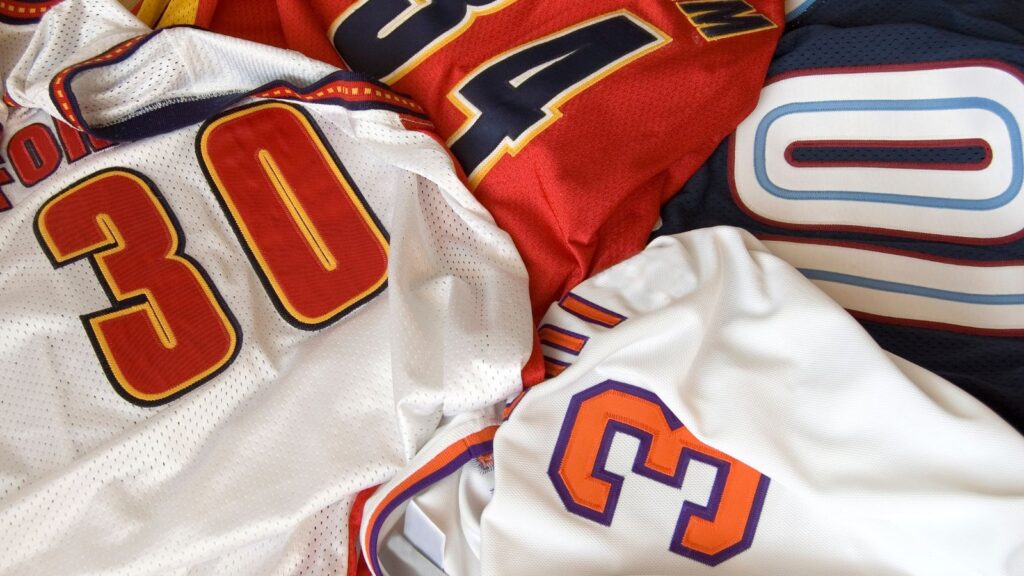
NBA jerseys are far more than fabric stitched into shape. They are cultural artifacts of the sport that carry memory, identity, and emotion. A great jersey can instantly transport fans to a specific era and bring back the sound of packed arenas, the rhythm of hardwood, and the personalities that defined the game. Colors, fonts, and logos become visual cues for ambition, rebellion, dominance, or reinvention. Some designs endure because they represent championships, others because they dared to look different, and many because they became inseparable from the players and moments that elevated them into legend.
If you are a fan of NBA basketball, you know how important jerseys are. This article explores the most visually striking NBA jerseys in history by examining their aesthetics, the stars most closely associated with them, and the success achieved while wearing them. Iconic, bold, and symbolic, each of these is a fan favorite. Watching modern players wear them due to Nike’s love of retro inspired designs is amazing, as it brings back memories. It is great to sit back, relax, watch the action, and bet on NBA games while recalling memories of the greats wearing the same threads. Let’s dig deeper into it!
Toronto Raptors Purple Dinosaur
The original Toronto Raptors purple jersey with the leaping red dinosaur is one of the most instantly recognizable designs in NBA history. Debuting in 1995, the cartoonish raptor dribbling a basketball captured the league’s growing 1990s creativity and helped establish the Raptors as a global brand from day one. The player most associated with this look is Vince Carter, whose gravity defying dunks perfectly matched the bold, youthful energy of the design. While the jersey appeared briefly before his arrival, it became iconic during his rise to superstardom. In these uniforms, Toronto reached the playoffs for the first time in franchise history, making three consecutive postseason appearances from 2000 to 2002 and advancing to the second round in 2001. The jersey remains a symbol of the Raptors’ emergence and cultural relevance and has made a comeback in 2025.
Memphis Grizzlies Teal Bear
Similar to the Raptors jersey in fame and recognition, the bear themed Memphis Grizzlies design traces its roots to the franchise’s early years as the Vancouver Grizzlies. Its teal color scheme and a fierce grizzly bear logo are classic, as the design stood out in an era filled with experimental visuals. Blending the Pacific Northwest imagery with bold colors, it simply looks right. The player most closely associated with this jersey is Shareef Abdur-Rahim, the franchise’s first true star and a consistent scoring presence. Despite its visual impact, on court success was limited during this period as the Grizzlies struggled to establish themselves and failed to make the playoffs before relocating to Memphis in 2001. Still, the jersey has gained retro appreciation over time and represents the NBA’s willingness to embrace regional identity and expressive design. Its popularity today outweighs its competitive results, making it a classic despite modest team success. It has also made a recent resurgence in the league.
Chicago Bulls Green
The green Chicago Bulls jersey is a rare and unconventional entry in the franchise’s visual history, exclusively made for St. Patrick’s Day games. By reimagining the Bulls’ traditional red and black palette, the green uniform created a striking contrast while maintaining the team’s iconic branding. They look eerily similar to the classic Boston Celtics design, and were criticized for it, but ultimately, they were a success. The Derrick Rose era is associated most with this jersey. Although the Bulls did not use the green design as a full time uniform, the team’s popularity during the 1990s and early 2010s ensured that any variation became memorable. The green Bulls jersey stands as an experiment and a reminder of how subtle and unorthodox design departures can become iconic when paired with basketball’s most successful dynasty.
Orlando Magic Pinstriped
The pinstriped Orlando Magic jersey of the 1990s is a masterclass in clean, modern design. Featuring vertical black pinstripes on white or blue fabric, the uniform projected sophistication while still feeling fresh and energetic. Shaquille O’Neal is the player most strongly associated with this look, though his teammate Penny Hardaway’s smooth style also helped define the era. Wearing these jerseys, the Magic rose rapidly from expansion team to contender, reaching the NBA Finals in 1995 and becoming a consistent playoff presence throughout the decade. The pinstripes came to symbolize Orlando’s fast paced, star driven identity and are still widely celebrated in throwback releases. Their lasting appeal lies in how perfectly the design matched the team’s on court confidence, youth, and ambition during one of the most exciting periods in franchise history. The current roster is promising, and the franchise has brought back the look many times, from Tracy McGrady in the 2000s to Paulo Banchero and Franz Wagner now.
Philadelphia 76ers Black Dazzle
The black Philadelphia 76ers jersey of the early 2000s embraced a bold, aggressive aesthetic that mirrored the team’s emotional intensity. With sharp red and gold accents and a dramatic black base, the uniform felt like a visual extension of the era’s street influenced basketball culture. Allen Iverson is inseparable from this design, as his fearless scoring and relentless competitiveness defined the team’s identity. Wearing these jerseys, the 76ers reached the NBA Finals in 2001, with Iverson earning MVP honors that year and delivering one of the most memorable postseason runs in league history. The jersey’s “dazzle” look was divisive at first due to the dominant black, but it has since become a cult classic celebrated for how unapologetically it represented both the player and the city during a peak moment of relevance and success.
Chicago Bulls Black and Red Alternate
The black and red Chicago Bulls jersey is synonymous with dominance, confidence, and championship basketball. Introduced as an alternate during the 1990s, the jersey inverted the team’s traditional color hierarchy, creating a sleek and intimidating look. It is much more bold and therefore popular than the classic colorways the team is mostly popular for. Michael Jordan is the undisputed figure most associated with this design, wearing it during some of the Bulls’ most memorable moments. In these, Chicago won during the 1996-1998 three peat, cementing their legacy and making the jerseys legendary. The black and red jersey amplified the Bulls’ aura of inevitability and made opponents feel defeated before tipoff. Its enduring popularity stems from its direct connection to winning, excellence, and basketball’s most iconic team. It has made a return in the 2025/2026 season, and it still looks dope!
Most Sold Jerseys in 2025/2026
1. Stephen Curry:Golden State Warriors
2. Luka Dončić:Los Angeles Lakers
3. Jalen Brunson:New York Knicks
4. Victor Wembanyama:San Antonio Spurs
5. LeBron James:Los Angeles Lakers
6. Anthony Edwards:Minnesota Timberwolves
7. Shai Gilgeous:Alexander:Oklahoma City Thunder
8. Jayson Tatum:Boston Celtics
9. Nikola Jokić:Denver Nuggets
10. Tyrese Maxey:Philadelphia 76ers
11. Cooper Flagg:Dallas Mavericks (rookie)
12. Kevin Durant:Houston Rockets
13. Giannis Antetokounmpo:Milwaukee Bucks
14. Cade Cunningham:Detroit Pistons
15. Donovan Mitchell:Cleveland Cavaliers
This is another interesting way for the fans to bet. Although not a very popular market, it is a big talking point and an aspect of the sport that is interesting to study. If you enjoy betting on basketball, especially the NBA, Stake.com has great odds and plenty of markets to choose from.
NBA Jersey Branding
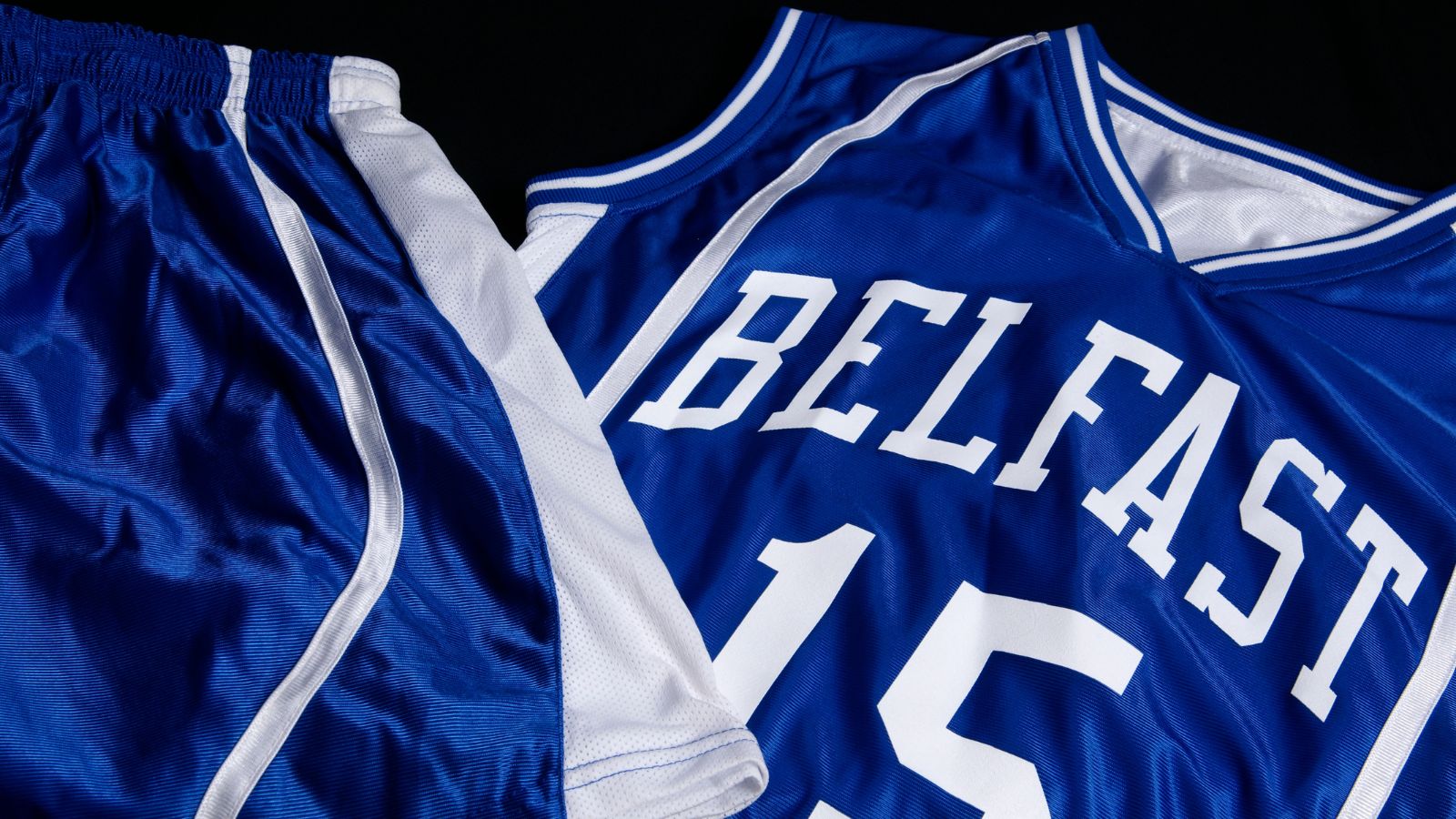
There cannot be an article about the most iconic and memorable jerseys in the best basketball league on the planet without a look back at the companies that made them. From the league’s earliest days to 2026, this contract was crucial for both the league and the manufacturers. While many fans remember Adidas and Reebok being there before Nike (Jordan), there have been a few before that.
Early Years (1946 to 1970s)
In the earliest stage of what is now the NBA, there was, of course, no single league wide supplier. Teams sourced jerseys from local and regional sporting goods companies, while the materials were heavy, like wool and later nylon. Designs varied widely from team to team, and there was no standardization of any sort. This era also had no branding consistency across the league and player names.
Sand-Knit (1970s to Early 2000s)
Sand-Knit was an unofficial but very dominant supplier based in Berlin, Wisconsin. They manufactured jerseys for most NBA teams and were known for tackle twill lettering and durable, heavyweight construction. Today, many classic jerseys from the Magic/Bird/Jordan era have Sand-Knit tags. Though they had never been the official league sponsor, Sand-Knit defined the look of NBA jerseys for decades and is therefore historically crucial and beloved.
Champion (1989-2001)
Champion had the honor of becoming the first official, league wide NBA jersey supplier. It introduced consistent branding as well as the first replica jerseys for fans. Champion jerseys became iconic in the 1990s thanks to the Jordan Bulls, Shaq Magic, and other superstar driven franchises. This was the first time the NBA fully commercialized jersey sales at scale and the time when marketing really went worldwide.
Reebok (2001-2006)
Reebok managed to take over after acquiring rights from the NBA. Although short lived, they are famous for cleaner and more modernized fits, as well as the introduction of alternate and special edition jerseys. This period also slowly started the major stylistic shift toward sleeker uniforms and shorter shorts, as opposed to the baggy era of the early 2000s.
Adidas (2006-2017)
As many fans know, Adidas jerseys marked one of the most influential eras in NBA uniform history. Their key innovations include ClimaCool and ClimaLite lightweight materials, as well as the short lived, controversial, but very memorable sleeved jerseys. This was a time of more frequent alternate uniforms, with each season bringing one or two completely new looks. Many fans associate Adidas jerseys with Kobe, LeBron, and early Curry eras.
Nike and Jordan (2017-Present)
After decades of trying and failing, Nike, the brand arguably associated with the sport the most, finally became the official on court supplier starting the 2017-18 season. As expected, major changes ensued. The shoowsh moved to the front of the jerseys, and most importantly, the City Edition, Statement, and Icon/Association uniform system was brought in. For the first time, jerseys included sponsor patches, ending the decades long tradition of no branding on the players. Nike focused heavily on performance driven fabrics and design storytelling tied to cities and cultures. The brand also streamlined how often teams refresh designs.
Although it officially operates under Nike and is not a separate deal, Jordan is far more beloved in the basketball world than its parent company. It started with the Charlotte Hornets only, due to Michael Jordan’s ties with the franchise, but then moved to supply Statement Edition jerseys for all 30 teams. The branding includes the Jumpman logo instead of the typical Nike Swoosh. Most fans agree that it looks more natural when the Jordan logo is the sponsor and not the Nike logo.
NBA Jerseys FAQs
- Why do NBA teams have multiple jersey colors besides home and away?
NBA teams now have Icon, Association, Statement, and City Edition jerseys to boost creativity, celebrate local culture, and keep fans excited. The days of strict white at home rules are long gone. - What is the story behind City Edition jerseys?
City Edition jerseys are inspired by a team’s city history, culture, landmarks, or communities, like Miami’s Vice colors or Chicago’s nods to its flag. They are often the boldest and most experimental designs each season. - Why do some NBA jerseys have sponsor patches?
Sponsor patches were introduced in 2017 to generate more revenue for the teams and the leagues and modernize the league’s look. They are small (about 2.5 x 2.5 inches) but big business; some deals are worth tens of millions per year. Fan jerseys do not have sponsor patches. - Why do players sometimes change their jersey numbers?
Players may switch numbers when joining a new team, to honor idols, for personal reasons, or because their preferred number is retired. Occasionally, superstition or a “fresh start” plays a role too. - What is the difference between authentic, swingman, and replica jerseys?
Authentic jerseys match what players wear on the court. Swingman jerseys offer a similar look with stitched or heat pressed details, and replica jerseys are more affordable with simpler materials. - Can an NBA team refuse to wear a jersey design?
Yes. Teams and players can push back on designs they feel do not represent them well. While Nike collaborates with the league and teams, final approval often involves multiple stakeholders and higher ups.