
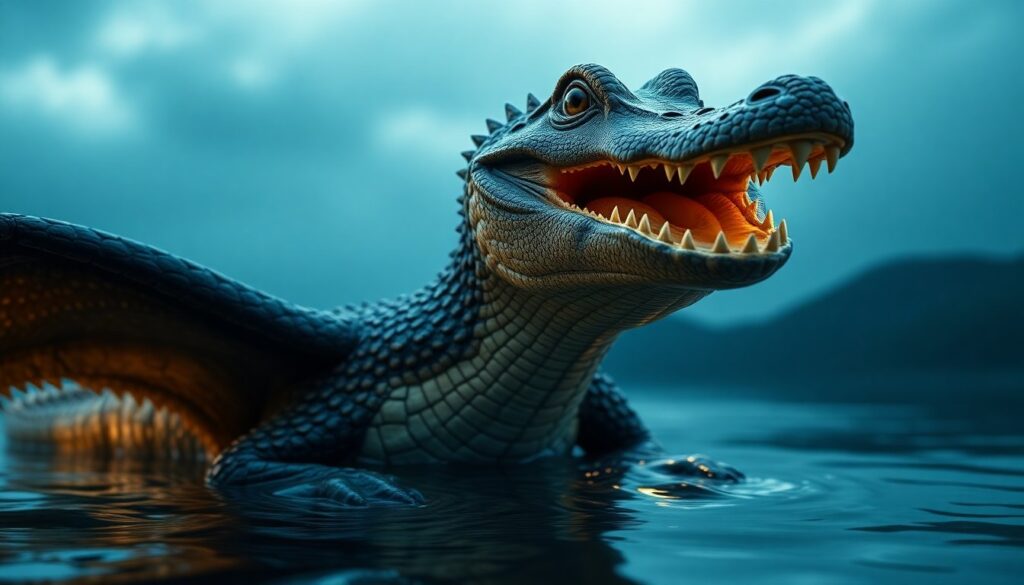
The phrase pterodactyl crocs gatorgrossis names a popular hybrid idea. It mixes pterosaur traits with crocodile traits. It appears online, in art, and in casual conversation. This article reports the origin of the name. It lists common descriptions. It gives clear answers about plausibility based on anatomy and fossils.
Key Takeaways
- The term pterodactyl crocs gatorgrossis originated online as a hybrid concept combining pterosaur and crocodile traits, mainly used in art and popular culture.
- Anatomical differences between pterosaurs and crocodiles, such as bone structure and muscle placement, make a natural pterodactyl crocs gatorgrossis highly implausible.
- Fossil evidence supports distinct evolutionary lines for pterosaurs and crocodiles with no fossils showing a hybrid like pterodactyl crocs gatorgrossis.
- The pterodactyl crocs gatorgrossis idea persists due to its emotional appeal, media representation, and usefulness in education to illustrate scientific principles.
- Scientists and educators use the hybrid myth to teach anatomy, paleontology, and the scientific method by contrasting it with real fossil findings.
What Is “Gatorgrossis”? Origins, Name, And Popular Descriptions
The term pterodactyl crocs gatorgrossis began as an internet phrase. Fans combined words to make a memorable label. Creators fused pterodactyl and crocodile imagery in art and memes. Writers then added the pseudo-Latin suffix to sound scientific.
Early posts described a flying reptile with a crocodile head or a crocodile body with wings. Artists drew long jaws, armored skin, and membrane wings on a stocky torso. Videos and game mods kept the image alive.
Folklore-style descriptions vary. Some accounts say it hunts from rivers and skies. Some say it nests in cliffs and eats fish and deer. The descriptions focus on fear and wonder, not on fossil or anatomical evidence. That mix helped the idea spread quickly.
Collectors and hobbyists use the phrase as a tag. Scientists and museums rarely use the phrase except to explain its fiction. Writers use it as shorthand for hybrid prehistoric creatures in fiction and games.
Anatomy And Physiology: Pterodactyl Traits Versus Crocodilian Features
Pterosaurs and crocodiles show very different anatomy. Each group evolved for different lives. The differences make a true pterodactyl crocs gatorgrossis unlikely.
Pterosaurs had hollow bones. They had large forelimbs modified into wings. They had a lightweight skull with a wide beak in many species. Their pelvis and shoulder joints fit a flying lifestyle.
Crocodiles had heavy, dense bones. They had a strong, laterally flattened tail for swimming. Their limbs sit at the body sides for belly-level walking. Their skulls bear strong bite muscles and heavy armor.
A hybrid would need conflicting systems. Flight demands low weight and large wing surfaces. Crocodile strength demands dense bone and heavy musculature. That mix would create mechanical problems for both flight and swimming.
Muscle placement also conflicts. Pterosaur wing motion derives from large pectoral and shoulder muscles placed for flapping. Crocodilian limbs and tail depend on axial muscles and a rigid, load-bearing spine. Combining those designs would reduce efficiency in air and water.
The lining of the skin also differs. Pterosaurs show evidence of filament-like pycnofibers. Crocodiles show thick, scale-like osteoderms. A combined integument would present thermoregulation and weight issues for flight.
Overall, anatomy points to two separate adaptive solutions. The anatomy argues against a naturally evolved pterodactyl crocs gatorgrossis.
Fossil Evidence, Paleontology, And Scientific Plausibility
Fossils do not show mixed pterosaur-crocodylian skeletons. Paleontology records distinct pterosaur lineages and separate crocodylian lineages across the Mesozoic and Cenozoic eras. Scientists use bone shape, growth patterns, and microstructure to classify specimens.
Pterosaur fossils show hollow bones and wing finger bones. Crocodylian fossils show dense bones and tail vertebrae adapted for swimming. Researchers find no fossils that combine those characters in one organism.
Hybridization across such distant groups would require extreme genetic compatibility. Modern biology finds hybridization mainly among closely related species within the same family. That constraint makes a natural pterodactyl crocs gatorgrossis highly unlikely.
Some fossils show convergent traits. For example, some marine reptiles evolved paddle-like limbs similar to modern whales. Such convergence can create superficial likenesses but not true hybrids. Fiction often misreads convergence as direct mixing.
Scientists hence treat the pterodactyl crocs gatorgrossis as myth or creative fiction. Museums and paleontologists use the myth to teach about anatomy and evolution. They compare real fossils with imagined hybrids to explain why the hybrids fail scientific tests.
Cultural Impact: Myths, Media Depictions, And Why The Idea Persists
The pterodactyl crocs gatorgrossis idea persists because it appeals to emotion. People like hybrids that mix fear and novelty. Media and games show dramatic predators. Those images spread fast.
Artists use the phrase pterodactyl crocs gatorgrossis as a creative prompt. Writers use it to label monsters in stories and games. Social media amplifies striking images and short descriptions.
The idea also fits human pattern-seeking. People combine familiar animals to imagine new threats. That process helps explain why the hybrid returns in art, fan fiction, and pop culture.
Educators and communicators use the myth as a tool. They ask students to compare the hybrid with real fossils. That exercise highlights anatomy, function, and scientific method.
Finally, the hybrid serves simple entertainment needs. It offers a quick thrill and a clear visual. That low cost and high payoff help keep the phrase pterodactyl crocs gatorgrossis alive in public conversation.